| Brand Name: | HeJin |
| Model Number: | HJ160 |
| MOQ: | 1 Set |
| Price: | Negotiatable |
| Payment Terms: | L/C,T/T |
| Supply Ability: | 1 set per 3 months |
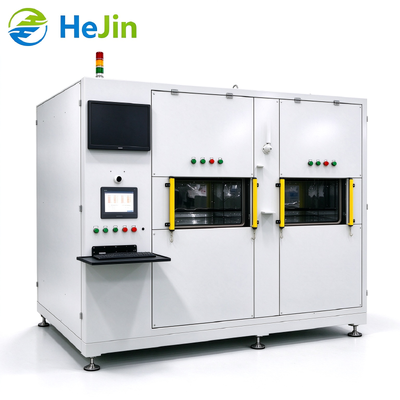
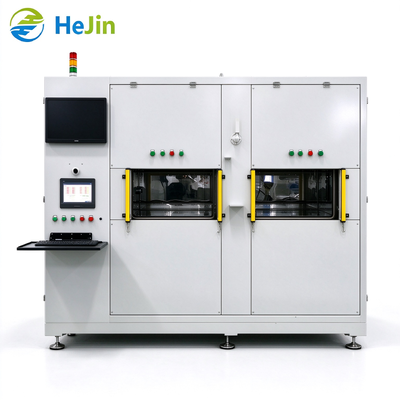
Dual-Chamber Air Spring Helium Leak Tester for Automotive Components with High-Sensitivity Vacuum Leak Detection
Product Description
The dual-chamber Air Spring Helium Leak Tester is designed to detect small leaks in automotive air springs and air suspension components. Using vacuum-based helium leak detection, it provides a specified leak detection sensitivity of ≤1 * 10⁻⁶ mbar·L/s. With two vacuum chambers, helium recovery and production-oriented test control, the system helps manufacturers improve sealing inspection consistency while supporting efficient quality control on the production line.
Product Introduction
Reliable Leak Detection for Automotive Air Springs
An air spring must retain pressure and maintain reliable sealing throughout its service life. Small leaks around the rubber bellows, end connections or sealing interfaces may be difficult to identify through visual inspection alone. For manufacturers, the challenge is not simply finding an obvious leak, but detecting small leakage paths consistently before a component moves to the next production stage.
HeJin's Air Spring Helium Leak Tester is developed for this type of precision inspection. It uses a vacuum-based helium leak detection process to evaluate the tightness of automotive air springs and compatible sealed components. Its specified leak detection sensitivity of ≤1 * 10⁻⁶ mbar·L/s supports applications that require more sensitive inspection than a basic visual or conventional pressure-hold check.
The dual-chamber configuration is designed around production efficiency. While the actual loading sequence and cycle time depend on the configured process, two chambers provide a practical basis for organizing testing operations and reducing avoidable waiting between test cycles.
As a source manufacturer with in-house R&D, engineering design and production capabilities, HeJin can discuss fixture design, component interfaces, test criteria and production-line integration directly with your engineering team. This makes it easier to evaluate whether the equipment matches your air spring dimensions, sealing requirements and manufacturing workflow before placing an order.
Features and Advantages
1 .Dual-Chamber Vacuum Testing
The system features two vacuum chambers and supports testing two products per machine. This arrangement is intended for production environments where inspection capacity and consistent test conditions both matter.
2 .Two-Stage Leak Detection
The specified process uses nitrogen for large-leak detection and helium for micro-leak detection. This separates the initial gross-leak check from the more sensitive tracer-gas inspection stage.
3 .High-Sensitivity Helium Detection
The specified leak detection sensitivity is ≤1 * 10⁻⁶ mbar·L/s. Actual inspection results depend on the test setup, calibration, component configuration and agreed acceptance criteria.
4 .Helium Recovery for Operating-Cost Control
The system specifies a helium recovery rate of ≥96%. Helium recovery can help reduce fresh gas demand during repeated testing. Actual consumption and savings depend on operating conditions and the configured recovery process.
5 .Production-Oriented Test Cycle
The specified production cycle is ≤60 seconds per piece, including loading and unloading. This gives production planners a defined reference for evaluating station capacity, while the final line output should be validated under actual operating conditions.
6 .Test Data and MES Connectivity
The control system provides touchscreen operation, process parameter display, test-result recording and statistical functions. MES connection is supported according to the supplied specification, helping manufacturers plan production traceability and quality-data management.
Technical Specifications
| Technical item | specification |
|---|---|
| Equipment type | Dual-chamber vacuum helium leak testing system |
| Primary application | Automotive air springs and related pneumatic sealing components |
| Chamber configuration | Dual-chamber linkage |
| Number of products per machine | 2 products |
| Large-leak detection gas | Nitrogen |
| Large-leak pressure | 0–2 MPa, adjustable |
| Large-leak pressure specification | ±0.02 MPa |
| Micro-leak detection gas | Helium |
| Helium pressure | 0–2 MPa, adjustable |
| Helium pressure specification | ±0.02 MPa |
| Leak detection sensitivity | ≤1 * 10⁻⁶ mbar·L/s |
| Tooling quantity | 2 sets |
| Production cycle | ≤60 s/piece, including loading and unloading |
| Helium recovery rate | ≥96% |
| Equipment dimensions | 2000 * 1000 * 2000 mm (dimensions can be customized) |
| Equipment weight | ≤2000kg |
If you want to know more parameter information about this equipment, you can consult our sales staff.
What components can be tested?
This equipment is primarily designed for testing automotive air springs, as well as various compatible pneumatic sealing components that fall within the specified workpiece capacity range.
Automotive Air Springs
Used primarily to verify the airtightness of air suspension spring assemblies and to identify potential leak paths that could compromise pressure-retention capabilities.
Air Suspension Bellows and End Components
Suitable for a variety of compatible bellows assemblies and end-cap connections (subject to fixture compatibility and specific test parameters).
Rubber-to-Metal Sealing Components
Components consisting of rubber, composite materials, and metal interfaces can be tested, provided their geometry, internal volume, and sealing structure align with the equipment’s configuration requirements.
Other Pneumatic Sealing Components
For other types of components, an engineering assessment—covering dimensions, internal volume, rated pressure, connection design, and required leak-rate limits—is necessary to determine suitability.
FAQs
Q1. What is an air spring helium leak tester used for?
It is used to evaluate the airtightness of automotive air springs and compatible sealed pneumatic components by detecting helium leakage under defined test conditions.
Q2. What is the leak detection sensitivity of this system?
The published HJ160 specification is ≤1 * 10⁻⁶ mbar·L/s. Actual performance verification should use a suitable calibrated reference leak and agreed test conditions.
Q3. Can the machine test two air springs at the same time?
The system has two linked vacuum chambers and supports two products per machine. The exact timing and degree of simultaneous operation depend on the configured testing sequence.
Q4. What is the maximum workpiece size?
The published maximum workpiece diameter is Ø203 mm, maximum length is 600 mm, and maximum workpiece volume is ≤3 L. The actual part and fixture arrangement should be reviewed before ordering.
Q5. What is the production cycle?
The specified cycle is ≤60 seconds per piece, including loading and unloading. Actual line output should be confirmed through a process review or acceptance test.
About HeJin
HeJin, operated by HJ AUTOMATIC CONTROL TECHNOLOGY CO., LTD, is based in Guangzhou, China. Founded in 2012, the company has more than 100 employees, including over 50 technical engineers, with capabilities in R&D, engineering design and equipment manufacturing.
Its equipment portfolio covers leak testing, environmental reliability testing, industry-specific performance testing, gas handling systems and automatic welding equipment.
For manufacturers seeking an automotive helium leak detection solution, HeJin combines equipment development and manufacturing capabilities with direct technical communication. This helps customers evaluate not only the machine itself, but also how the proposed testing process fits their product and production requirements.
Overall Rating
Rating Snapshot
The following is the distribution of all ratingsAll Reviews