logo

products details

Created with Pixso. Home Created with Pixso. Products Created with Pixso.
Leak Testing Equipment
Created with Pixso.

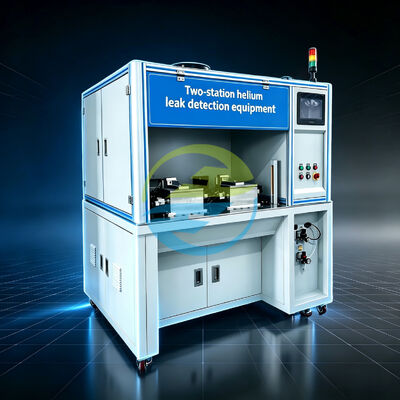
High-Precision Relay Helium Leak Testing Equipment for Automatic Gas Tightness Inspection with Two Test Stations

High-Precision Relay Helium Leak Testing Equipment for Automatic Gas Tightness Inspection with Two Test Stations

Brand Name: HeJin
Model Number: HJ224
MOQ: 1 Set
Price: Negotiatable
Payment Terms: L/C,T/T
Supply Ability: 1 set per 3 months
Detail Information
Place of Origin:
China
Certification:
Third party calibration certificate/ CE(cost additional)
Equipment Type:
Dual-station Helium Leak Detection System
Test Product:
Pre-charged Product
Vacuum Chambers:
2 Chambers
Parts Per Chamber:
1-4 Pieces
Loading Method:
Manual
Production Capacity:
200 Pieces/hour
Test Gas:
Helium
Power Supply:
380 V, 3-phase 5-wire System, 50 Hz
Packaging Details:
Plywood
Highlight:

helium leak testing equipment with two stations

,

automatic gas tightness inspection equipment

,

high-precision relay leak testing equipment

Product Description

High-Precision Relay Helium Leak Testing Equipment for Automatic Gas Tightness Inspection with Two Test Stations

Product Introduction

A relay may look perfectly assembled from the outside, yet its sealing performance can depend on defects that are impossible to see during a visual inspection.

For manufacturers of automotive relays, sealed electrical components and other precision assemblies, leak testing is therefore more than another quality-control step. It is a practical way to verify whether the finished component has achieved the required level of gas tightness before it moves to the next production stage.

The two-station relay helium leak testing equipment is developed specifically around this requirement.

The system uses helium as a tracer gas. Because helium can pass through extremely small leakage paths, it can be detected by a helium leak detector when a sealed workpiece has a leakage path. This makes helium leak testing particularly suitable for components where conventional pressure-decay or air-tightness testing alone may not provide sufficient sensitivity.

The two-station configuration also gives production teams greater flexibility. While one station is carrying out its programmed test cycle, the other station can be prepared for the next workpiece. This helps reduce unnecessary waiting between operations and makes the equipment easier to integrate into a continuous production workflow.

The is primarily designed for relay testing, while its fixture and process configuration can be customized according to the actual structure, dimensions and testing requirements of the customer's workpiece.

Features

Two Independent Test Stations

The two-station structure allows the equipment to handle testing operations through two independent work positions. This configuration is suitable for production environments where manufacturers need to balance testing accuracy with practical throughput.

Helium Tracer Gas Detection

Helium is used as the detection gas. Its physical characteristics make it suitable for identifying very small leakage paths in sealed components.

Automatic Leak Detection

The equipment is designed around an automatic helium leak detection process, reducing dependence on manual judgement during the actual detection stage.

Relay-Focused Fixture Design

The equipment is primarily intended for relay testing. HeJin can develop dedicated fixtures according to relay dimensions, connection structures and production requirements.

Flexible Workpiece Capacity

The published configuration supports 1–4 workpieces for inspection, providing flexibility for different loading arrangements.

Production-Oriented Engineering

Rather than offering only a standalone detector, HeJin develops the equipment around the customer's complete testing process, including fixture design, testing sequence and production-line integration.

Main Functions

  • Automatic helium leak detection
  • Relay gas-tightness inspection
  • Helium tracer-gas testing
  • Two-station testing operation
  • Workpiece fixture positioning
  • Test pressure control
  • Leak-result evaluation
  • etc...

What Can This Equipment Test?

The primary application of sealed relay testing.

Typical applicable workpieces may include:

  • Automotive relays
  • Sealed relays
  • Industrial relays
  • Hermetically sealed electrical components
  • Sealed electronic components

The system can also be considered for other sealed components when their dimensions, connection method and leak-test requirements are compatible with the equipment.

For a new application, customers should provide the workpiece drawing, sealing structure, test pressure, required allowable leak rate and expected production capacity. HeJin can then evaluate the testing method and fixture configuration.

What Does the Equipment Detect?

The focuses on gas-tightness and leakage performance, including:

External Leakage

Detection of leakage from the sealed workpiece to the surrounding environment.

Internal Sealing Defects

Detection of leakage paths caused by sealing interfaces, joints or structural defects.

Micro-Leakage Paths

Helium-based detection can identify very small leakage paths that may be difficult to identify through visual inspection.

Sealing Consistency

The repeatable test process helps manufacturers monitor the consistency of sealing performance across production batches.

International Reference Standards

ISO 20485:2017 — Non-Destructive Testing — Leak Testing — Tracer Gas Method

ISO 20485:2017 is the most directly relevant international reference for tracer-gas leak testing. ISO states that the standard describes techniques for leak detection using a tracer gas and a tracer-gas-specific leak detector.

ISO 20486:2017 — Calibration of Reference Leaks for Gases

ISO 20486:2017 is part of the ISO 19.100 non-destructive testing standards covering leak testing and calibration of reference leaks for gases. It is relevant when establishing traceable reference leakage conditions for leak-testing systems.

ISO 9001 Quality Management Reference

ISO 9001 provides the internationally recognized framework for quality management systems.

Important 2026 update: ISO 9001:2026 has now been published, while ISO 9001:2015 has been withdrawn. Therefore, project documentation should identify the applicable edition rather than automatically describing ISO 9001:2015 as the current edition.

IEC 60529 — Degrees of Protection Provided by Enclosures

IEC 60529 defines the IP Code system used to classify degrees of protection provided by enclosures for electrical equipment. The IEC consolidated publication includes the original standard together with its amendments.

Technical Specifications

Technical Item Specification
Equipment Type Dual-station helium leak detection system
Test Product Pre-charged product
Number of Vacuum Chambers 2 chambers
Parts per Chamber 1–4 pieces
Loading/Unloading Method Manual
Production Capacity 200 pieces/hour
Acceptance Criteria Acceptance test based on validation with 400 pieces
Test Gas Helium
Power Supply 380 V, 3-phase 5-wire system, 50 Hz
Power Connection Service connection provided
Helium Supply Gas cylinder supply
Supply Distance Within 2 meters of the equipment inlet

Detail shots

High-Precision Relay Helium Leak Testing Equipment for Automatic Gas Tightness Inspection with Two Test Stations

Quality After-Sales Service

Engineering Support That Continues After Delivery

For leak testing equipment, delivery is not the end of the project.

The real challenge often begins when the equipment enters the production environment: fixture positioning, test parameters, helium supply, reference-leak calibration and daily operation all affect testing stability.

That's why HeJin provides technical support throughout the equipment lifecycle.

FAQ

  1. What products can this equipment test?
  2. It is designed for pre-filled products requiring helium leak testing. The specified compatible range includes valve body models 250, 400, and 600, as well as epoxy resin models 100, 300, and 500. Other products can be evaluated based on their structure and testing requirements.

  3. How many vacuum chambers does the equipment have?
  4. It features two vacuum chambers.

  5. How many products can be tested in each chamber?
  6. Each vacuum chamber is designed to accommodate 1 to 4 workpieces.

  7. What is the leak alarm threshold?
  8. The actual acceptance criteria for the customer's products should be determined based on their technical specifications and applicable testing procedures.

  9. What gas is used for leak testing?
  10. Helium is the specified test gas.

  11. What is the production capacity?
  12. The specified production capacity is 200 units per hour.

  13. Is loading and unloading automatic?
  14. The equipment is configured for manual loading and unloading; automatic loading and unloading can be customized.

  15. What power supply is required?
  16. 380 V, three-phase five-wire system, 50 Hz.

  17. What kind of helium supply is required?
  18. Helium is supplied via gas cylinders. The gas source should be located within 2 meters of the equipment's gas inlet, with an inlet pressure of 0.2 MPa.

  19. What kind of compressed air is required?
  20. The specified compressed air requirement is 0.5–0.7 MPa; clean, dry compressed air is required for pneumatic valve operation.

About HeJin

HeJin is a China-based source manufacturer specializing in industrial testing and automation equipment.

Founded in 2012, the company focuses on R&D, engineering design, manufacturing and technical support for specialized equipment used in automotive components, leak detection, gas handling and industrial testing applications.

Rather than simply supplying standard machines, HeJin works with customers to develop equipment around their actual production requirements.

From the first technical discussion to fixture design, equipment manufacturing, commissioning and after-sales support, the engineering process remains closely connected.

That matters when a testing system needs to work reliably as part of a real production line.

Ratings & Review

Overall Rating

5.0
Based on 50 reviews for this supplier

Rating Snapshot

The following is the distribution of all ratings
5 stars
100%
4 stars
0%
3 stars
0%
2 stars
0%
1 stars
0%

All Reviews

M
Michael Turner
United States Dec 1.2025
This helium leak test machine works far better than the previous system we used. The accuracy is outstanding, and our testing efficiency improved by over 30%.
J
Jonas Weber
Germany Oct 22.2025
Die Verarbeitungsqualität ist hervorragend. Wir haben zwei Geräte für Membranspeichertests gekauft, und beide arbeiten mit bemerkenswerter Stabilität und Wiederholgenauigkeit.