| Brand Name: | HeJin |
| Model Number: | HJ0613A |
| MOQ: | 1 Set |
| Price: | Negotiatable |
| Payment Terms: | L/C,T/T |
| Supply Ability: | 1 set per 3 months |
A cordless kettle is used repeatedly throughout the day. Every time the kettle is placed on its base or lifted away, the electrical connector experiences mechanical movement and contact stress. Over time, these repeated actions may lead to contact wear, unstable connections, or changes in electrical performance.
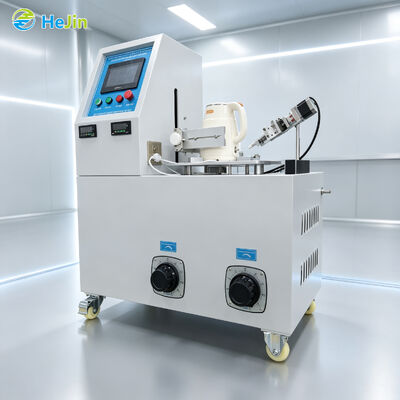
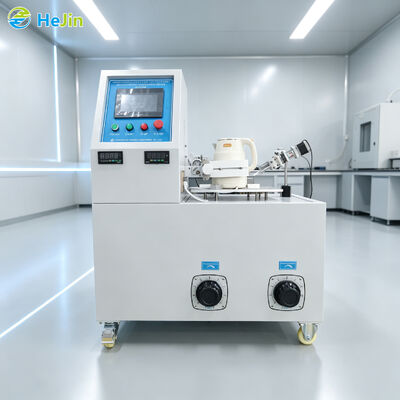
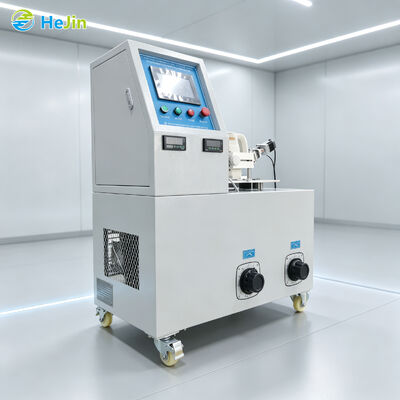
The Cordless Kettle Plug Insertion and Withdrawal Endurance Tester is developed to simulate these repeated operating movements under controlled testing conditions. By performing preset insertion and withdrawal cycles, the equipment helps manufacturers evaluate the mechanical durability and electrical continuity of kettle base connectors and similar cordless appliance interfaces.
Designed for household appliance manufacturers, quality inspection laboratories, and product development teams, this testing system combines automated movement, adjustable test parameters, electrical load testing, and cycle monitoring in one integrated platform.
As a source manufacturer, HeJin provides in-house equipment development, mechanical design, electrical control integration, production, commissioning, and technical support to help customers build a testing solution around their actual product requirements.
This insertion and withdrawal endurance testing machine is designed to evaluate the connection performance of cordless household appliances during repeated placement and removal.
The test sample is securely mounted, and the equipment drives the insertion and withdrawal mechanism through a preset stroke and speed. The system can perform electrical continuity monitoring during testing and record both the total test cycles and effective conduction cycles.
With PLC control and touchscreen parameter setting, operators can configure test conditions without repeatedly adjusting the mechanical system manually. The built-in adjustable electrical load supports loaded testing, while additional unloaded cycles can be used to evaluate mechanical endurance without continuous electrical loading.
The system is particularly suitable for testing cordless electric kettles and can also be configured for compatible cordless irons and blenders.
The programmable control system allows operators to set test parameters, monitor running status, and manage test cycles through an intuitive touchscreen interface. This reduces repetitive manual operation and makes routine testing easier to organize.
The test stroke can be preset within the available adjustment range to accommodate different connector structures and appliance base designs.
The insertion and withdrawal speed can be adjusted according to the test procedure, sample structure, and required testing conditions.
An adjustable electrical load supports testing under specified electrical conditions. The load parameters can be configured according to the requirements of the sample and applicable test procedure.
The system records the total mechanical test cycles and electrical conduction cycles, helping operators review connector performance during and after testing.
The equipment combines repeated mechanical movement with electrical continuity monitoring to help identify contact instability and performance changes during endurance testing.
When the preset test count is reached, the equipment can stop automatically, reducing the need for continuous operator supervision.
The testing fixture and movement configuration can be adapted to compatible cordless appliance connectors, subject to sample dimensions and fixture requirements.
The equipment provides the following testing and monitoring functions:
These functions allow quality engineers to evaluate connector performance over repeated use and compare test results between different product designs, materials, and manufacturing batches.
The equipment is designed for testing applications associated with relevant household appliance safety standards. Test procedures and acceptance criteria should be confirmed against the applicable edition of the standard and the specific product requirements.
Particular requirements for appliances for heating liquids
This clause addresses the mechanical stresses experienced by appliance couplers of cordless appliances during normal use.
For cordless kettles, the referenced endurance procedure includes repeated placement and withdrawal of the appliance from its stand, with specified loaded and unloaded testing conditions.
Key test considerations include:
Particular requirements for kitchen machines
This standard may be relevant to compatible cordless kitchen appliances, including cordless blenders, depending on the applicable product category and test procedure.
The testing equipment can support repeated connector movement and electrical continuity monitoring for suitable samples.
Particular requirements for electric irons
For compatible cordless iron designs, the equipment may be used to evaluate repeated insertion and withdrawal movements of the appliance connector in accordance with the applicable testing procedure.
IEC 60335-2-15:2024 is the seventh edition of the particular standard for appliances for heating liquids. The applicable testing procedure, cycle count, loading conditions, and acceptance criteria should be verified against the edition required by the target market or certification program.
The equipment itself does not replace a complete appliance safety assessment or certification process.
Evaluate the durability of kettle-to-base connectors during repeated placement and removal.
Testing can help identify:
For compatible cordless iron structures, evaluate repeated connection and disconnection movements between the iron and its base.
Suitable compatible blender base connectors can be evaluated through repeated mechanical movements and electrical conduction monitoring.
During product development, manufacturers can compare different connector structures, contact materials, mechanical designs, and assembly configurations under consistent testing conditions.
The system is designed to support the evaluation of:
The equipment records test cycles and conduction cycles. Detailed failure analysis, contact resistance measurements, temperature measurements, and other evaluations may require additional instruments or test procedures.
A motor-driven mechanism performs repeated insertion and withdrawal movements according to preset parameters. The movement is controlled to maintain consistent testing conditions throughout the endurance procedure.
The PLC system manages the mechanical movement, test cycle counting, parameter settings, and operational logic. This provides a more repeatable testing process than manually operated endurance testing.
The insertion and withdrawal stroke and testing speed can be configured through the control interface. This allows engineers to adapt the testing procedure to different connector designs and requirements.
The built-in adjustable load allows the sample to be evaluated under specified electrical conditions. Load settings should be selected according to the appliance rating and the applicable standard.
The system monitors current-related conduction conditions during testing and records effective conduction cycles. This helps identify potential connection interruptions during repeated movement.
The equipment records preset cycles, completed cycles, and conduction cycles. These records provide a useful basis for laboratory test reports, product comparison, and quality control.
| Parameter | Specification |
|---|---|
| Equipment Name | Cordless Kettle Plug Insertion and Withdrawal Endurance Tester |
| Model | HJ0613A |
| Applicable Category | Household Appliance Test Equipment |
| Input Power Supply | AC 220 V, 50 Hz |
| Control System | PLC Control |
| Operation Interface | Touchscreen |
| Testing Station | Single Station |
| Drive Method | Motor-Driven |
| Test Samples | Cordless kettles, cordless irons, cordless blenders |
| Insertion and Withdrawal Stroke | 0–100 mm, presettable |
| Insertion and Withdrawal Speed | 0–30 cycles/min, presettable |
| Preset Test Cycles | 0–999,999 cycles |
| Conduction Cycle Display | 0–999,999 cycles |
| Mechanical Test Action | Insertion and withdrawal; kettle switch opening and closing movement |
| Built-In Electrical Load | 0–250 V, 0–15 A |
| Electrical Test Mode | Loaded and unloaded testing |
| Sample Performance Judgment | Conduction judgment based on current monitoring |
| Test Cycle Counting | Automatic |
| Test Completion Control | Automatic stop at preset cycle count |
| Fixture Configuration | Sample-specific fixture arrangement |
| Dimensions | 1000 × 500 × 1200 mm |
| Equipment Weight | Approximately 200 kg |
Technical specifications are subject to confirmation against the final equipment configuration and customer requirements. The electrical load range does not mean every voltage/current combination can be applied simultaneously at maximum values.
HeJin is a source manufacturer with its own equipment development and production capabilities. Customers can communicate directly with the technical and production teams rather than relying solely on intermediaries.
Our engineering team works on mechanical structures, control systems, test fixtures, and equipment integration. We can discuss the testing requirements of different appliance connector designs before equipment configuration.
Different kettle bases and cordless appliance connectors may have different dimensions, movement requirements, and testing conditions.
HeJin can discuss fixture design, movement configuration, control requirements, and other project-specific details to help customers select a suitable testing arrangement.
From mechanical assembly to control-system integration and equipment commissioning, our production process focuses on equipment functionality, operational stability, and practical usability in laboratory and manufacturing environments.
Our service team can assist with equipment selection, test procedure discussions, installation guidance, operation training, troubleshooting, and follow-up technical support.
We understand that testing equipment is part of a customer's daily quality workflow. Our goal is to help customers operate their testing process with confidence, not simply deliver a machine.
| Evaluation Factor | HeJin Testing Solution | Basic Manual Testing Setup |
|---|---|---|
| Test Movement | Motor-driven automated movement | Operator-dependent |
| Cycle Management | Preset and automatic counting | Manual counting may be required |
| Testing Speed | Adjustable within configured range | Difficult to maintain consistency |
| Electrical Monitoring | Built-in conduction monitoring | Additional instruments may be needed |
| Load Testing | Built-in adjustable electrical load | External load setup may be required |
| Test Repeatability | Controlled movement parameters | More affected by operator technique |
| Test Data | Cycle and conduction cycle records | Manual recordkeeping |
| Operation | PLC touchscreen control | Manual operation |
| Customization | Engineering discussion and fixture customization | Depends on available setup |
A properly configured automated endurance tester helps reduce operator workload, improve test consistency, and make long-cycle testing easier to manage.
The final selection should always be based on the required standard, sample design, test conditions, and laboratory workflow.
Use repeated connector testing during the development stage to identify mechanical or electrical performance issues before mass production.
Evaluate connector components and base assemblies from different suppliers under comparable testing conditions.
Establish endurance test procedures for routine quality verification and product consistency monitoring.
Support internal reliability testing, engineering evaluation, and product development workflows.
Compare connector designs, contact structures, and product revisions using consistent test parameters.
The equipment is primarily designed for cordless electric kettles. Compatible cordless irons and cordless blenders can also be tested when the fixture and movement configuration are suitable.
The testing speed can be adjusted from 0 to 30 cycles per minute through the control system.
Yes. The insertion and withdrawal stroke can be preset from 0 to 100 mm, subject to the equipment configuration.
The test cycle counter supports a preset range of 0 to 999,999 cycles.
Yes. The equipment includes a built-in adjustable electrical load with a specified range of 0–250 V and 0–15 A. Actual test conditions must be selected according to the sample rating and applicable procedure.
HeJin is a manufacturer specializing in industrial testing equipment, automotive component testing systems, environmental reliability testing equipment, household appliance testing equipment, and customized test solutions.
With in-house R&D, mechanical design, electrical control integration, and manufacturing capabilities, we work with customers to develop practical testing equipment for their production and laboratory requirements.
Our solutions are designed to support manufacturers in evaluating product reliability, improving quality control, and building confidence in product performance.
From equipment selection and project communication to manufacturing, commissioning, and after-sales support, HeJin aims to provide a dependable testing equipment partnership.
Looking for a reliable cordless kettle connector endurance testing solution?
Tell us about your sample, connector structure, required testing cycles, applicable standards, and electrical test conditions. Our engineering team can help discuss the suitable equipment configuration and testing approach.
Contact HeJin for:
Contact our team to discuss your project and receive a testing solution tailored to your requirements.