| Brand Name: | HeJin |
| Model Number: | HJ-LT-1 |
| MOQ: | 1 Set |
| Price: | Negotiatable |
| Payment Terms: | L/C,T/T |
| Supply Ability: | 1 set per 3 months |
Automotive Battery Housing Helium Leak Testing Machine with 34 sec/piece Cycle and 0–0.5 MPa Charging Pressure
——Automotive Power Battery Housing Leak Testing Equipment with Automatic Sealing and Helium Detection
Product Description
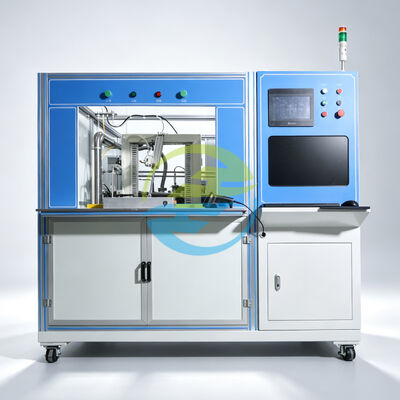
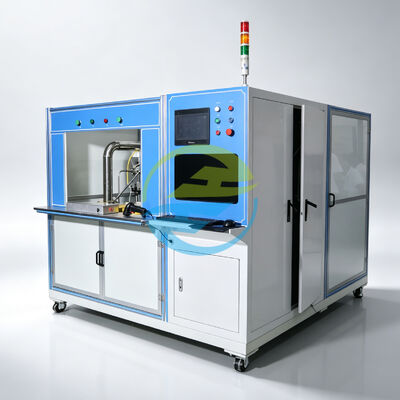
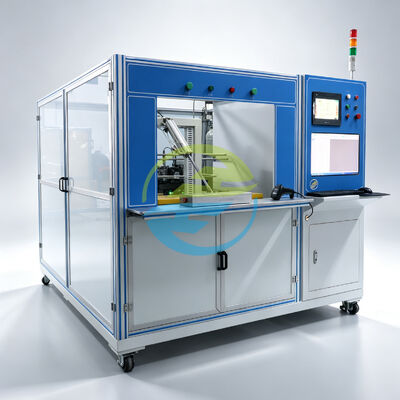
The helium leakage detection equipment for automotive power battery casings developed, produced and manufactured by Hejin Company is developed for manufacturers who need to perform reliable sealing testing on battery casings, covers and related automotive battery components.
The system uses helium as the tracer gas and is designed to identify leak paths that may be difficult to detect through traditional visual inspection or basic pressure testing. The controlled vacuum environment, helium charging process and highly sensitive leak detection methods work together to provide a repeatable inspection process for battery case production.
The equipment is manufactured by HeJin, a source manufacturer that integrates R&D, engineering design, and production capabilities. From fixture development and equipment manufacturing to debugging and after-sales technical support, HeJin has the strength to provide complete leak testing solutions rather than simply providing stand-alone detectors.
Product introduction
For car battery casings, the sealing quality cannot be judged just by observing the surface of the finished product.
Enclosures can have a clean appearance while retaining very small leak paths around sealing interfaces, welding areas, connector openings or structural joints. For manufacturers, identifying these issues before components enter the next production stage can have a meaningful impact on process consistency and product quality.
This is where the value of using helium leak testing comes into play.
The automotive battery casing leakage testing system uses helium as a tracer gas and uses a dedicated leak detection process to evaluate the sealing condition of the component being tested. Depending on the selected configuration, the workpiece is placed in a vacuum chamber or special fixture, evacuated to the required conditions, exposed to helium under specified test conditions, and then evaluated by a leak detector.
The final equipment configuration can be determined based on your battery case size, required leakage rate, test pressure, cycle time and fixture configuration.
Why Helium Leak Testing for Battery Housings?
Battery housings contain multiple structural and sealing interfaces. A leak-testing method needs to do more than simply identify obvious leakage.
Helium is widely used as a tracer gas because tracer-gas leak testing can be performed with a leak detector specifically designed to detect the selected tracer gas. ISO 20485:2017 specifically describes leak detection techniques using tracer gas and a tracer-gas-specific leak detector.
For automotive battery housing production, helium leak testing can help manufacturers investigate:
The exact detectable area depends on the fixture design and the way the battery housing is connected to the test circuit.
Product Features
Designed for Automotive Battery Housing Inspection
The system is designed around the physical structure and sealing requirements of automotive battery components, including battery housings and covers.
Helium Tracer-Gas Detection
Helium is used as the tracer gas for fine leak detection. The method allows the system to respond specifically to helium released through a leakage path.
Vacuum Chamber Testing
The vacuum chamber method provides a controlled testing environment around the workpiece. HeJin's published battery-related systems use vacuum-chamber technology for leak inspection.
Automated Testing Process
The testing sequence can integrate evacuation, helium charging, detection, result judgment and other process stages into a controlled testing cycle.
Production-Oriented Cycle
HeJin's published HJ-LT-1 configuration specifies a 34-second cycle time per piece.
Customized Fixtures
Battery housings vary considerably in dimensions, interfaces and sealing structures. The fixture can therefore be designed around the customer's actual workpiece.
Main Functions
Technical Specifications
| No. | Technical Item | Specification |
|---|---|---|
| 1 | Equipment Dimensions | ≤ 2000 * 2500 * 2000 mm |
| 2 | Alarm Leak Rate | 5E-5 mbar·l/sec |
| 3 | Power Consumption | 15 kW |
| 4 | Number of Testing Stations | 1 station |
| 5 | Helium Charging Pressure | 0–0.5 MPa |
| 6 | Gross Leak Detection Method | Negative-pressure gross leak detection |
| 7 | Production Cycle | 34 sec/piece |
| 8 | Product Sealing Method | Automatic |
| 9 | Product Loading | Manual |
| 10 | Fixtures | 2 sets of fixtures for 1 product type |
| 11 | Data Processing | Data processing and parameter storage functions |
| 12 | Noise Level | ≤75 dB, measured 1 m from the equipment |
Core Technology
Helium Tracer-Gas Leak Detection
The fundamental detection principle is based on helium tracer gas.
The tested component is connected to the appropriate test circuit. Helium is introduced under the defined test conditions, while the detection side is maintained at the required vacuum condition.
If a leakage path exists, helium passes through that path and reaches the detection side. The helium leak detector measures the corresponding signal and compares it with the preset acceptance value.
ISO 20485:2017 specifically defines techniques for detecting leaks using a tracer gas and a tracer-gas-specific leak detector.
Vacuum Chamber Technology
The vacuum chamber creates a controlled environment for the leak detection process.
HeJin's published vacuum-chamber system describes a sequence involving evacuation, gross leak testing, helium charging, fine leak testing, helium recovery and chamber venting.
This process helps reduce dependence on manual inspection and provides a more consistent testing procedure.
Background Helium Management
Helium background concentration is an important consideration when performing sensitive leak testing.
Before fine leak detection, the detection system can monitor the background helium signal and establish the required baseline before the helium charging stage.
This helps create a more controlled measurement environment.
Applications
Detail pictures
![]()
About HeJin
HJ AUTOMATIC CONTROL TECHNOLOGY CO., LTD, operating under the HeJin name, was established in Guangzhou in 2012. The company specializes in R&D, manufacturing and sales of technology-intensive industrial testing equipment.
Its product portfolio covers Leak Testing Equipment, Auto Parts Test Equipment, IP Test Equipment, Household Appliance Test Equipment, Flammability Testing Equipment, Impact Testing Equipment and other industrial testing solutions.
For customers looking for a direct manufacturer, this integrated capability matters. HeJin designs and manufactures its equipment in China and develops customized testing solutions according to product and compliance requirements.
For more information about the manufacturer, customers can visit the HeJin About Us page or explore the Leak Testing Equipment category.
FAQuestions
1.What products can this helium leak testing equipment test?
The primary application is sealed relay testing. The fixture and test process can be customized according to the actual relay structure and connection interface.
2.What gas is used for fine leak detection?
The referenced configuration uses 100% helium as the fine leak detection gas.
3.What is the maximum test pressure?
The reference configuration specifies 25 bar for gross and fine leak testing, with the pressure adjustable downward. The final pressure should be established according to the customer's product requirements.
4.How many products can be tested at once?
The reference configuration has two testing stations, with one workpiece per station.
5.What is the reference cycle time?
The published reference configuration specifies approximately 30 seconds per workpiece, corresponding to approximately 120 workpieces per hour.