logo

products details

Created with Pixso. Home Created with Pixso. Products Created with Pixso.
Auto Parts Test Equipment
Created with Pixso.

Three-Station Helium Leak Testing Equipment for Automotive A/C Receiver Driers | Automatic Air Tightness Inspection System

Three-Station Helium Leak Testing Equipment for Automotive A/C Receiver Driers | Automatic Air Tightness Inspection System

Brand Name: HeJin
Model Number: HJ211
MOQ: 1 Set
Price: Negotiatable
Payment Terms: L/C,T/T
Supply Ability: 1 set per 3 months
Detail Information
Place of Origin:
China
Certification:
Third party calibration certificate/ CE(cost additional)
Equipment Type:
Three-Station Helium Leak Detection Equipment
Detection Method:
Helium Tracer Gas Leak Detection
Test Principle:
Helium Leak Detection/Mass Spectrometer-Based Leak Detection
Station Configuration:
Three Stations (customizable)
Helium Test Pressure:
≤ 4.2 MPa
Total Leakage Pressure:
≤ 4.2 MPa
Cycle Time:
5 Seconds/piece
Helium Recovery Rate:
≥98%
Packaging Details:
Plywood
Highlight:

helium leak testing equipment for automotive

,

automatic air tightness inspection system

,

three-station AC receiver drier tester

Product Description
Three-Station Helium Leak Testing Equipment for Automotive A/C Receiver Driers | Automatic Air Tightness Inspection System
Product Introduction

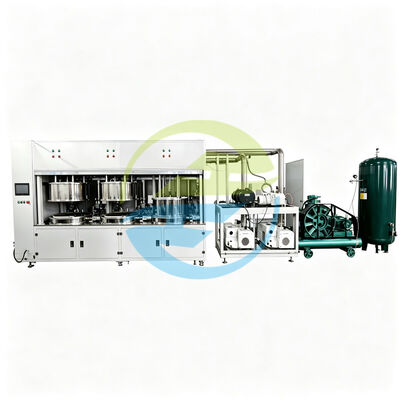
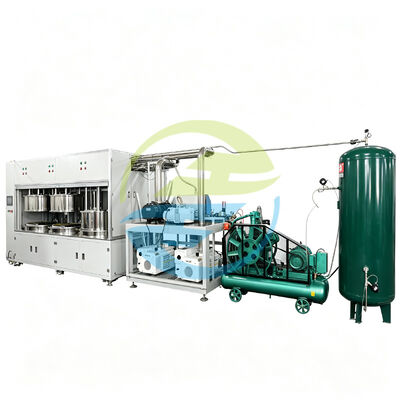
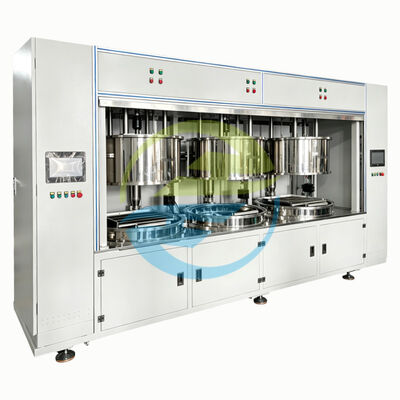
The Hejin three-station helium leak detection system is designed for automated leak detection of automotive air conditioning receiver-dryers and similar sealing components. Using helium as the tracer gas, the system combines controlled filling, vacuum evacuation, and helium leak detection technologies to identify leaks that are difficult to detect using traditional airtightness testing methods.

This three-station configuration is designed for production-oriented quality control, achieving a good balance between testing accuracy, operational efficiency, and repeatability. It is ideal for manufacturers looking to enhance end-of-line inspection without overly complex testing processes.

As a direct manufacturer, Hejin provides a one-stop supply chain service encompassing equipment design, engineering development, manufacturing, commissioning, and after-sales support.

Understanding Helium Leak Detection

A receiver drier may look like a relatively simple automotive component, but its sealing performance directly affects the integrity of an air-conditioning system. A small leakage path can allow refrigerant or other working media to escape during service.

This is where helium leak detection becomes valuable.

The HeJin three-station leak testing system uses helium as a tracer gas. The test component is connected to the testing system, helium is introduced according to the programmed test sequence, and the helium leak detector identifies leakage according to the detected helium signal.

Compared with basic pressure-decay or bubble-based inspection, helium leak testing provides a quantitative method for detecting very small leakage paths. Helium leak detection is widely used for demanding industrial applications where conventional leak inspection may not provide sufficient sensitivity.

For automotive air-conditioning receiver driers, the objective is straightforward: test the sealing performance consistently, identify defective parts early, and prevent leakage problems from reaching the next production stage.

Why Choose a Three-Station Configuration?

Production testing is not only about sensitivity. It is also about keeping the inspection process practical.

A three-station configuration allows multiple components to be handled within the same testing system, helping manufacturers organize loading, testing and unloading more efficiently.

For production environments, the main benefits include:

  • Multi-station testing architecture
  • Reduced dependence on manual inspection judgment
  • Consistent programmed test procedures
  • Repeatable testing conditions
  • Suitable for automated production workflows
  • Easier integration into existing quality-control processes
  • Flexible fixture configuration for different receiver-drier designs
  • Potential for customized station layouts according to product requirements

The actual station cycle, fixture configuration and production capacity should be confirmed according to the customer's workpiece dimensions, allowable leak rate and production requirements.

Technical Specifications
Technical Item Confirmed Specifications/Status
Equipment Type Three-Station Helium Leak Detection Equipment
Main Test Object Automotive Air Conditioning Reservoir Dryer
Detection Method Helium Tracer Gas Leak Detection
Tracer Gas Helium
Test Principle Helium Leak Detection/Mass Spectrometer-Based Leak Detection
Station Configuration Three stations (customizable)
Main Test Objectives Air tightness/leak detection
Total Leakage Test Supports relevant reservoir dryer configurations (optional)
Helium Leak Detection Test Supported
Leakage Rate Judgment Supported
Automatic Testing Configurable automatic test process (optional)
Test Result Judgment Configurable automatic judgment (optional)
Helium Recovery Provided as a configurable system function (optional)
Helium Test Pressure ≤ 4.2 MPa*
Total Leakage Pressure ≤ 4.2 MPa
Cycle Time 5 seconds/piece
Helium Recovery Rate ≥98%
Pump/Chamber Dimensions 700 * 230 * 450 mm mm (customizable)

For more information on equipment specifications and configurations, please consult our staff.

Application Industries
  • Automotive Air Conditioning

    Receiver driers and other sealed A/C components require reliable leak inspection before entering the next production stage.

  • Automotive Component Manufacturing

    Suppliers can use helium leak testing as part of incoming inspection, process inspection or end-of-line quality control.

  • HVAC & Refrigeration

    Helium leak detection can be used where small leakage rates need to be evaluated quantitatively.

  • Thermal Management Components

    Selected sealed components used in automotive thermal-management systems can be tested with customized fixtures.

Main Testing Functions
Testing Function Purpose
Gross Leak Inspection Identify relatively large leakage paths before fine helium detection
Vacuum Evacuation Establish the required vacuum condition before helium detection
Helium Charging Introduce helium tracer gas into the test component
Helium Leak Detection Detect and quantify leakage through the component
Leak Rate Judgment Compare the detected result with the preset acceptance limit
Automatic Pass/Fail Judgment Provide consistent test-result evaluation
Test Data Recording Record testing results according to the configured control system
Helium Recovery Optional/configurable function where helium recovery is incorporated into the system design
Detailed Real Shot Pictures
Three-Station Helium Leak Testing Equipment for Automotive A/C Receiver Driers | Automatic Air Tightness Inspection System
FAQ
  • 1. What is this helium leak testing equipment designed for?

    It is primarily designed for leak inspection of automotive air-conditioning receiver driers and similar sealed components.

  • 2. Why use helium instead of ordinary air?

    Helium is a highly suitable tracer gas for sensitive leak detection because it can pass through very small leakage paths and can be quantitatively detected by a helium leak detector.

  • 3. Is the system fully automatic?

    The equipment is designed for automated testing, with the actual degree of automation determined by the final HJ-211 configuration.

  • 4. What does the three-station design mean?

    It means the testing system is configured with three testing stations, allowing production-oriented multi-station operation.

  • 5. Can the machine test different receiver drier models?

    Yes, customized fixtures can be designed for different workpiece configurations, subject to engineering evaluation.

  • 6. Can other automotive A/C components be tested?

    Potentially yes. Related receiver-drier helium leak testing systems can be adapted to other automotive A/C components by changing fixtures and test connections.

  • 7. Can the helium be recovered?

    A helium recovery function can be incorporated depending on the final equipment configuration.

About HeJin

HeJin is a professional manufacturer and exporter of industrial testing and inspection equipment, with products covering leak testing, automotive component testing and other reliability and performance testing applications.

The company's engineering and manufacturing capabilities allow it to provide more than standard catalog equipment. For customers with special workpieces or production requirements, HeJin can participate in the solution from the early engineering stage.