| Brand Name: | HeJin |
| Model Number: | HJ195 |
| MOQ: | 1 Set |
| Price: | Negotiatable |
| Payment Terms: | L/C,T/T |
| Supply Ability: | 1 set per 6 months |
Automatic High Voltage DC Relay Helium Leak Test Line for EV Components | Precision DC Contactor Airtightness Inspection System
Product Description
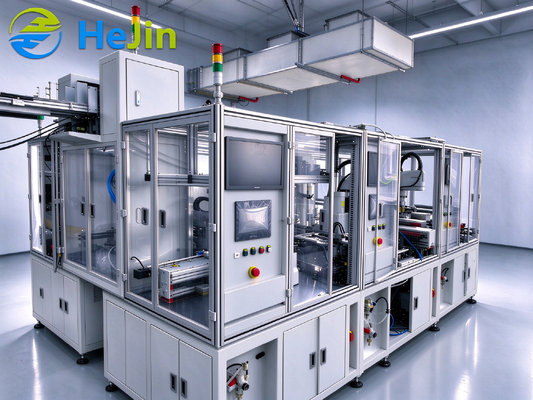
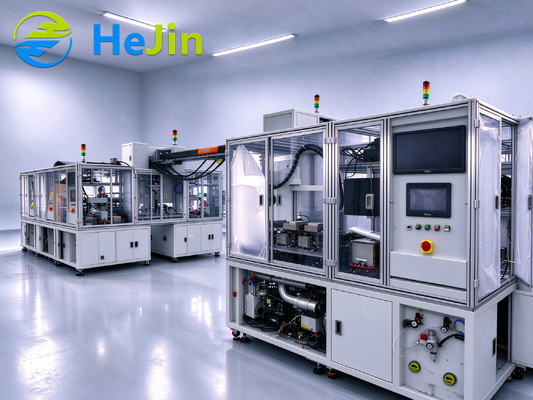
Designed for high-volume automotive and EV component manufacturing, this automatic high voltage DC relay helium leak test line provides an integrated solution for relay airtightness inspection. Combining automated handling, dedicated testing fixtures, helium leak detection and intelligent process control, the system helps manufacturers identify sealing defects, maintain consistent product quality and improve production efficiency. Developed and manufactured by HeJin, the equipment can be customized to meet different relay structures, testing requirements and production line configurations.
High-Precision Automated Helium Leak Testing for High Voltage DC Relays
In electric vehicle manufacturing, high voltage DC relays play an important role in managing power connections and maintaining the reliability of electrical systems. Their internal sealing performance is equally important, especially when the components are required to maintain stable hermetic conditions throughout their service life.
A small leakage path inside a relay housing may compromise its sealing performance, affect internal gas conditions and create quality concerns during long-term operation.
Unlike a conventional standalone leak detector, this integrated system combines automated workpiece handling, precision positioning, dedicated sealing fixtures, helium tracer gas detection and intelligent control into one coordinated inspection process.
The equipment is designed for high-volume DC relay and DC contactor manufacturing, helping production teams improve inspection consistency, reduce manual intervention and establish a more traceable quality control process.
An Integrated Solution from Engineering to Production
The value of an automated helium leak testing line comes from how well its individual systems work together.
HeJin integrates the key elements of the inspection process, including:
Each system can be configured according to the relay structure, sealing design, production capacity and customer's inspection requirements.
Product Features
1. Automated Inspection Process
The integrated production line coordinates workpiece positioning, fixture operation, leak testing and result judgment. Automation helps reduce repetitive manual operations and improves consistency between inspection cycles.
2. High-Sensitivity Helium Detection
Helium is used as a tracer gas to identify leakage paths that may be difficult to evaluate using conventional inspection methods. The detection range and alarm threshold are configured according to the customer's product specifications.
3. Customized Relay Fixtures
Different DC relay models have different housing dimensions, connection ports and sealing structures. HeJin develops dedicated fixtures based on the actual workpiece drawings and sealing interfaces.
4. Intelligent PLC Control
The control system coordinates the testing sequence and monitors the operating status of the equipment. Test parameters and process conditions can be managed through the configured human-machine interface.
5. Automatic Result Evaluation
The system compares measured leak-rate values against preset acceptance criteria and identifies qualified or non-qualified workpieces.
Technical Specifications
Item | Parameter
Production Cycle Time (Entire Line): ≥500 pcs/h
Workpiece Transport: Automatic
Transport Method: Conveyor belt + robotic arm
Workstation 1:
Number of Vacuum Chambers: 8
Test Gas: Helium
Helium Pressure: 0–0.5 MPa
Gross Leak Detection: ≤10 Pa
Alarm Leak Rate: ≤8.0 * 10⁻¹⁰ Pa·m³/sec
Workstation 2:
Workpiece Inversion: Performed by robotic arm
Visual Inspection: Performed by robotic arm + vision system
Copper Tube Straightening: Performed by robotic arm + vision system
Charging Stations: 20
Operating Environment: Equipped with hydrogen leak detection system
Ultimate Vacuum Level: 5 * 10⁻⁴ Pa
Power Supply: 380V
Compressed Air: 0.5–0.7 MPa
Equipment Dimensions: 11000 * 3500 * 2000 mm
Color: Pantone Warm Gray 1C (optional)
Note: This equipment is a customized product; specifications may vary based on actual requirements and are provided for reference only. For further technical details, please consult our staff.
Test Objects
The automatic high voltage DC relay helium leak testing line is designed for airtightness inspection of sealed electrical switching components used in automotive and electric vehicle manufacturing.
Depending on fixture design and the approved testing process, potential workpieces include:
What Can the Equipment Detect?
Housing Leakage
Evaluates leakage through the relay housing and its sealing structure.
Cover and Housing Joint Leakage
Checks sealing performance at the interface between the relay cover and housing.
Terminal Sealing Leakage
Evaluates leakage around sealed terminal areas and electrical connection interfaces when suitable fixtures are provided.
Feedthrough Sealing Leakage
Checks leakage around glass-to-metal, ceramic-to-metal or other sealed feedthrough structures where applicable.
Welded Joint Leakage
Evaluates sealing performance at welded housing connections.
Internal Cavity Leakage
Checks the hermetic sealing performance of the specified internal cavity.
Assembly-Related Leakage
Helps identify sealing defects introduced during component assembly or joining processes.
Micro-Leakage
Identifies small leakage paths within the detection range and sensitivity of the configured helium leak testing system.
The system evaluates leakage performance. It does not automatically inspect electrical contact resistance, switching endurance, insulation performance or other electrical characteristics unless additional testing modules are integrated.
![]()
![]()
Helium Leak Testing Line vs. Conventional Inspection Methods
Different leak testing methods serve different manufacturing requirements. The appropriate choice depends on the required detection sensitivity, workpiece structure, production capacity and quality acceptance criteria.
| Comparison | Automated Helium Leak Testing | Pressure Decay Testing | Bubble / Immersion Testing |
|---|---|---|---|
| Detection Principle | Helium tracer gas | Pressure variation | Visible bubble observation |
| Small Leak Detection | Suitable for high-sensitivity applications | Application dependent | Limited |
| Quantitative Measurement | Yes | Yes | Generally limited |
| Automatic Production Integration | High | High | Possible but more operator-dependent |
| Test Result Recording | Configurable | Configurable | Usually requires additional arrangements |
| Leak Localization | Possible with appropriate method | Generally not direct | Visual identification |
| Production Consistency | High with validated process | High with validated process | More dependent on operating conditions |
| Equipment Investment | Generally higher | Generally lower | Generally lower |
| Typical Application | Precision sealing inspection | General airtightness testing | Gross-leak screening |
Frequently Asked Questions About High Voltage DC Relay Helium Leak Testing(FAQs)
1. What is a high voltage DC relay helium leak test line?
It is an automated inspection system designed to evaluate the sealing performance of high voltage DC relays using helium as a tracer gas. It integrates workpiece handling, testing fixtures, helium detection and automatic result evaluation.
2. Why is helium used for DC relay leak testing?
Helium is suitable for precision leak detection because it can be detected at low concentrations by dedicated helium leak detectors. It helps manufacturers identify small leakage paths that may be difficult to evaluate through conventional inspection methods.
3. What types of relays can this equipment test?
The system is designed for high voltage DC relays and compatible DC contactors. The actual application depends on workpiece dimensions, housing structures, sealing interfaces and fixture compatibility.
4. Can the equipment detect micro-leakage?
Yes. The helium detection system is designed for sensitive leakage inspection. The actual minimum detectable leak rate depends on the selected detector, fixture arrangement, test conditions and calibrated system performance.
5. Can the machine test different relay models?
Yes. Dedicated fixtures and testing programs can be developed for different relay structures. The required tooling and changeover method should be evaluated according to the customer's product range.
About HeJin – Your Industrial Testing Equipment Manufacturing Partner
HJ AUTOMATIC CONTROL TECHNOLOGY CO., LTD. is a China-based manufacturer specializing in industrial testing equipment, leak detection systems and customized automation solutions.
Founded in 2012 and headquartered in Guangzhou, China, HeJin combines engineering design, product development and manufacturing capabilities to serve customers across automotive, refrigeration, electronics and industrial manufacturing sectors.
With an experienced technical team and manufacturing facilities, we focus on developing equipment that addresses practical production and inspection challenges.
Overall Rating
Rating Snapshot
The following is the distribution of all ratingsAll Reviews